
Reading Diary: Early Summer
Three audiobooks and one memoir

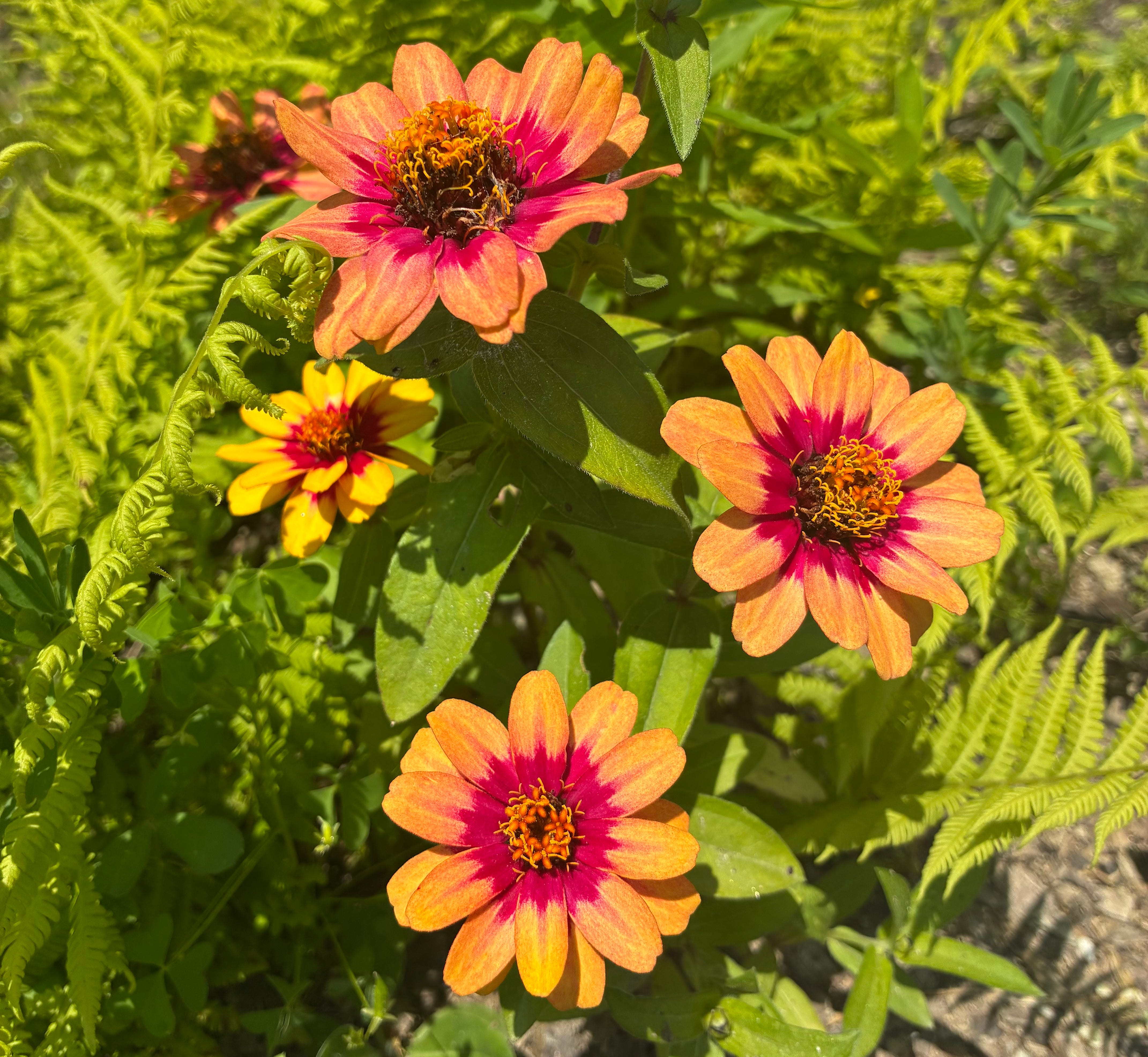
Summer is officially here. My kids are out of school, and I’ve been weeding my garden every day, which means I’ve been listening to a lot of audiobooks. Right now I’m listening to Michael Pollan’s A World Appears, a nonfiction book about the nature of consciousness.
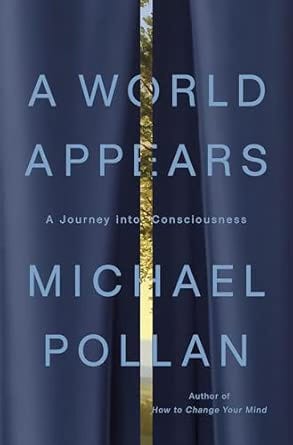
The first chapter was all about whether or not plants are sentient, which made me feel a little guilty as I weeded. Though, if you’ve read my novel, We Were Pretending, you may know I am pretty open to the idea of plant communications. I’m also interested in the theory that every living thing has some level of consciousness, one of the many theories about consciousness that Pollan explores. Pollan also writes a lot about AI and the possibility of computer sentience. It’s a heady book that feels like the inevitable follow-up to his previous book, How To Change Your Mind, about his psychedelic experiences.
A 500 Year History of America’s Delusions
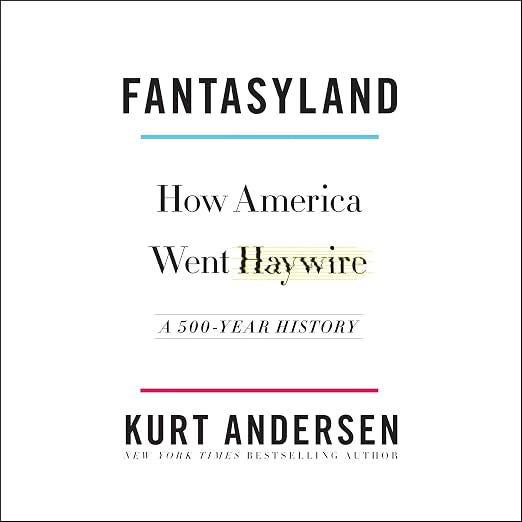
Since at least 2018, Mike has been telling me to read Fantasyland by Kurt Andersen, and I even found a hardcover copy on a stoop in Brooklyn. But I never got to it. I decided to give it a try on audiobook because it’s narrated by Andersen himself, who was for many years the host of Studio 360, a weekly arts & culture radio show that I used to listen to on WNYC. This turned out to be a good instinct: Andersen is a fantastic narrator and even works in his footnotes in an entertaining way.
Fantasyland is nonfiction, a cultural history of America based on Andersen’s theory that Americans are particularly prone to magical thinking and religious extremism. (The subtitle, by the way, is: How America Went Haywire: a 500 Year history.) Andersen argues that our tolerance for irrational thought is what led us to our current political moment of MAGA, Trump, and endless online conspiracies. Andersen traces our brand of crazy back to the Pilgrims, bizarre Protestants who came here to set up their own private utopia. Americans, Andersen contends, have an unusual urge to construct private, gated communities based on idealistic beliefs. He counts suburban development as a utopian impulse as well as the many and varied cultish religions that have sprung up in our country.
Andersen is not anti-religion by any means. He’s just pointing out that our country has something in its DNA that loves a good story, a ripe promise, a get-rich-quick scheme. This has been beneficial in some ways. A purely rational perspective can be overly pessimistic. There’s a reason American are known for their optimism. But our irrationality, Andersen says, has become toxic. We’ve lost touch with a fact-based reality and now it’s okay for anyone to believe anything.
Andersen published Fantasyland in 2017, which means he wrote and researched most of it before Trump was elected. His prescience is remarkable—I doubt he was at all surprised by the January 6 insurrection—and it makes me inclined to go along with his theory. He has a new novel, The Breakup, coming out in August, which I’m reading now (on Netgalley). It is set in 2045, in a future America that has split into two countries. I’m not very far into but I can see a lot of his Fantasyland research and thinking informing his speculative world.
Another Evangelical Memoir
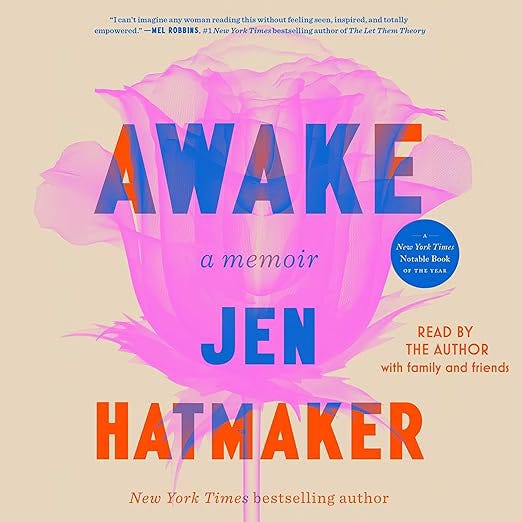
I listened to Awake, by Jen Hatmaker, as part of my ongoing research into the American evangelical movement. Hatmaker was at the center of it, a popular Christian author and podcaster with a huge online following. Her husband was also a Christian author and the two of them were a big deal. Then, during Covid, their marriage fell apart when Hatmaker overheard her husband dictating a voice text to his girlfriend. As with Belle Burden’s Strangers, this book starts with a marriage ending and becomes a story of about midlife reinvention and liberation.
Hatmaker’s relationship with evangelical Christianity was fraying before her marriage faltered. She ran into trouble with her followers when she tried to talk with them about the root causes of poverty, which meant thinking about systemic racism and white supremacist ideology. The simple stories she’d grown up with weren’t making sense to her anymore and she figured her followers were on a similar intellectual journey. They weren’t. So, she was already on the road to something new when she discovered that her husband was cheating on her.
Hatmaker is an extremely popular author, but I had never heard of her before seeking out this book. Listening to it was a reminder that there is a side of America I rarely see because I am not tuned into evangelical culture. I’ve also never been to Texas, where Hatmaker lives. At times, I felt like I was hearing a dispatch from another country. On top of that, Hatmaker’s temperament is pretty much the opposite of mine. She’s highly extroverted and very anxious. She worries about things it would never occur to me to worry about and makes friends in situations where I would probably just space out or listen to music. She has a big family, many close friends, and multiple group texts going every day. It was exhausting just listening to her describe some of the situations she found herself in. But I also found her very charming as a narrator. Her voice is conversational and confiding, so much so that I don’t think I would have enjoyed this book if I had read it—the chapters would have felt too short and the prose too chatty. Hatmaker also brings elements of podcasting into the audio version of her book, incorporating snippets from her podcast and asking friends and relatives to read certain portions of the text. In this way, her book felt like a new medium that landed somewhere between a long-form narrative podcast and a book.
Last Year’s Pulitzer Prize-Winning Memoir
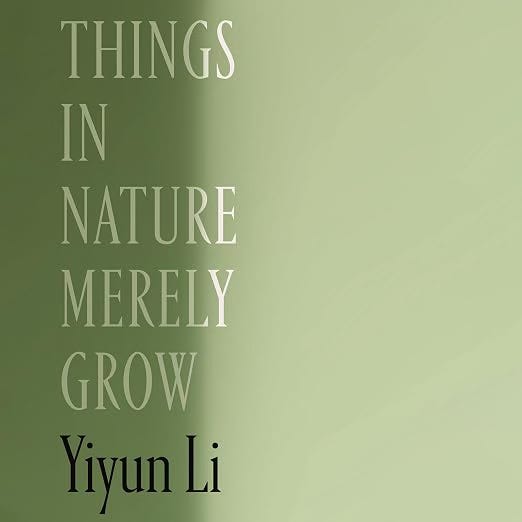
Author Yiyun Li’s terrible fate is to be the mother of two children who died by suicide. Things In Nature Merely Grow is about her reckoning with this horrific reality. I read this book rather than listening to it; I think it would have been too heavy for audio. I think what is most remarkable about this memoir—aside from the fact that Li found the strength to write it—is that she resists putting any sort of narrative on her sons’ deaths. She allows herself not to know exactly why her sons chose to take their own lives. She doesn’t put a reason on it or blame anyone. There is no cause and effect. This is the specific pain of suicide. The title alludes to her love of gardening, an activity that sustained her through such unthinkable losses. Things in nature merely grow is a kind of mantra for Li, something to describe the ongoingness of life itself. I’ve often wondered why gardening is so calming and why it is that people often start doing it in midlife. When I was younger, I never would have spent hours weeding—I would have thought it was boring—but now I go out there and my worries melt away. There is something about the persistence of plants, the way they just keep reaching toward the sun, that puts you touch with the lifeforce. “Touch grass” as the meme goes.
❤️ Link Love ❤️
Maine books and the places that inspired them.
An interview with Marilynne Robinson and Jon Fosse about how their belief in God informs their fiction.
This interview with Tom Junod about his father is fantastic. [Gift link.] After listening I added his memoir In the Days of My Youth I Was Told What It Means to Be a Man to my list of audiobooks.